Walk-In Shower vs Bath in a Derby Home: Which Makes More Sense?
Around 60% of bathroom renovation enquiries we get in Derby start with some version of the same question: should the bath go? It's rarely as simple as "showers are more popular now," even though that's broadly true. The right answer depends on who's using the bathroom, how long you're planning to stay in the property, and in some cases, what kind of buyer you'd want if you sold up. This guide walks through the actual trade-offs for a Derby home, rather than the generic "open-concept walk-in showers are trending" advice you'll find everywhere else.
Start by Thinking About Who Actually Uses the Bathroom
Before deciding either way, it's worth getting an honest assessment of your bathroom's layout and plumbing. Bathroom Fitters Derby can talk through what's realistic for your space before you commit to a direction.
If you've got young children, a bath isn't just nostalgia, it's genuinely useful for years. Bathing toddlers in a walk-in shower is awkward at best. On the other hand, if your household is all adults and nobody's used the bath in months except to dump laundry in it, that's a pretty strong signal. The bath isn't a bath at that point. It's a shelf.
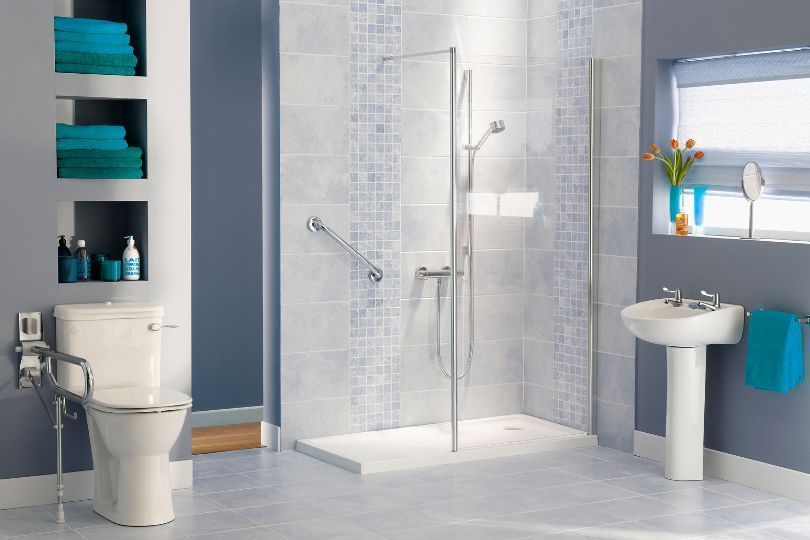
Households with older residents or anyone with mobility considerations often lean toward walk-in showers for practical reasons: stepping over a bath edge becomes harder with age, and a level-access or low-threshold shower removes that risk entirely. This doesn't have to mean a clinical "wet room" look. Modern walk-in shower enclosures can look just as smart as a bath-centred bathroom.
The Resale Question
This comes up a lot in Derby, particularly with semi-detached and terraced family homes around areas like Mickleover, Allestree, and Chaddesden, where family buyers are a significant part of the market. If your property has only one bathroom and no bath at all, it can put off buyers with young children, even if the rest of the house suits them.
If you've got more than one bathroom, this concern mostly disappears. Converting an en suite or second bathroom to a walk-in shower while keeping a bath in the main bathroom gives you the best of both: a more practical daily shower for most of the household, and a bath still available for the family that might buy the place in five years.
Replacing a bath with a walk-in shower in roughly the same footprint, same plumbing locations, typically costs £2,500–£4,500, including the shower enclosure, tray or formed base, tiling, and waterproofing. Costs increase if the floor needs lowering for a level-access shower, which can add £500–£1,500 depending on the construction of the floor and whether it's solid or suspended timber.
Going the other way, replacing a shower with a bath, is usually cheaper if the plumbing's already in roughly the right place, often £1,500–£3,000, but can cost more if the room's layout doesn't really suit a bath and changes to tiling, flooring, or even the door swing are needed to fit one in.
Don't Underestimate the Plumbing Question
We've covered the full cost breakdown for a bathroom renovation in Derby in more detail, but one thing worth flagging here specifically: a walk-in shower needs good drainage and water pressure to actually feel like an upgrade. Older Derby properties, particularly those with a loft-mounted cold water tank and gravity-fed systems, sometimes need a pump adding to get decent shower pressure. That's an extra cost worth checking before you commit, because a low-pressure walk-in shower is a worse experience than the bath it replaced.
Space Considerations
A walk-in shower doesn't always need more space than a bath, despite how it might look in showroom displays. A 1700mm bath takes up roughly the same floor area as a generously sized shower enclosure. Where space really matters is in smaller en suites and box rooms converted to bathrooms, common in Derby's Victorian terraces where an extra bathroom has been squeezed into what was originally a small bedroom. In these spaces, a shower often makes the room feel noticeably larger, since there's no bath panel breaking up the floor visually.
Making the Decision
If you're torn, think about it from the angle of what you'd regret more: losing the bath when you occasionally want a long soak, or keeping a bath that sits unused while you'd rather have a bigger, better shower every single day. For most adults-only households, the shower wins that comparison easily. For families with young children, or households planning to stay put for years with that in mind, the bath often earns its keep.
FAQ
Q: Does removing the only bath in a house affect its value? A: It can, particularly for family homes in areas with a strong family-buyer market. If your property has only one bathroom, keeping at least one bath is generally a safer choice for resale. With two or more bathrooms, converting one to a walk-in shower has little impact on value.
Q: How much does it cost to replace a bath with a walk-in shower in Derby? A: Typically £2,500–£4,500 if the plumbing stays roughly in place. If the floor needs lowering for a level-access shower, add £500–£1,500 depending on the floor construction.
Q: Will a walk-in shower have good water pressure in an older Derby home? A: Not always without changes. Older properties with gravity-fed hot water systems sometimes need a pump added to get decent shower pressure. It's worth checking your current system before committing to a walk-in shower, since low pressure can make the new shower feel worse than the bath it replaced.
Q: Is a walk-in shower a good option for a small bathroom? A: Often, yes. A shower enclosure can make a small bathroom feel larger than a bath would, since there's no bath panel breaking up the floor space. This is especially relevant in smaller en suites or bathrooms converted from box rooms, common in Derby's older terraced housing.
You might also like
Bathroom Fitting Derby